

China Commercial Window Shades for Energy-Efficient Office Spaces
2026-10-04
Windows are often the weakest point in an office building’s thermal envelope—especially in China’s hot summers and cold winters. A well-chosen commercial window shade doesn’t just filter glare; it actively reduces cooling and heating loads, trimming energy bills month after month. ROLLERGY specializes in exactly that: window shading systems designed for China’s commercial spaces, balancing daylight, comfort, and efficiency. Here’s what to look for before you invest.
Why China’s Office Towers Are Upgrading Their Window Shades
In many Chinese cities, the gleaming glass facades of office towers have long been a symbol of modernity and ambition. But behind those expansive windows, a quiet shift is taking place. Facility managers and building owners are replacing basic roller blinds with sophisticated shading systems that do far more than block afternoon glare. The motivation isn't aesthetic vanity—it's a response to rising energy costs, stricter building codes, and a growing awareness of how light and heat affect the people working inside.
The upgrade often starts with a simple complaint: workers near the perimeter feel the sun's heat on their backs by mid-morning, while those deeper in the floorplate rely on constant air conditioning. Traditional fabric shades either block too much daylight or let in too much solar gain. Newer systems use automated slats, dynamic glazing films, or exterior louvers that track the sun's path throughout the day. By adjusting in real time, these shades keep interior temperatures stable without turning the office into a dim cave. That balance cuts cooling loads significantly—some buildings report a 15 to 20 percent drop in HVAC energy use during summer months.
There's also a human factor pushing the change. Studies in workplace design have linked poor daylight control to eye strain, headaches, and lower productivity. When shades operate automatically, they prevent the midday “blinds down, lights on” cycle that wastes electricity and makes spaces feel closed off. Instead, occupants get consistent, comfortable light that shifts naturally with the weather. For multinational tenants—who increasingly demand green certifications like LEED or WELL—an upgraded shading system is no longer a luxury. It's a visible, measurable step toward healthier buildings and lower operating expenses. That dual benefit is why China's office towers are quietly rethinking what hangs in front of their windows.
The Hidden Cooling Load Behind Untreated Office Glass
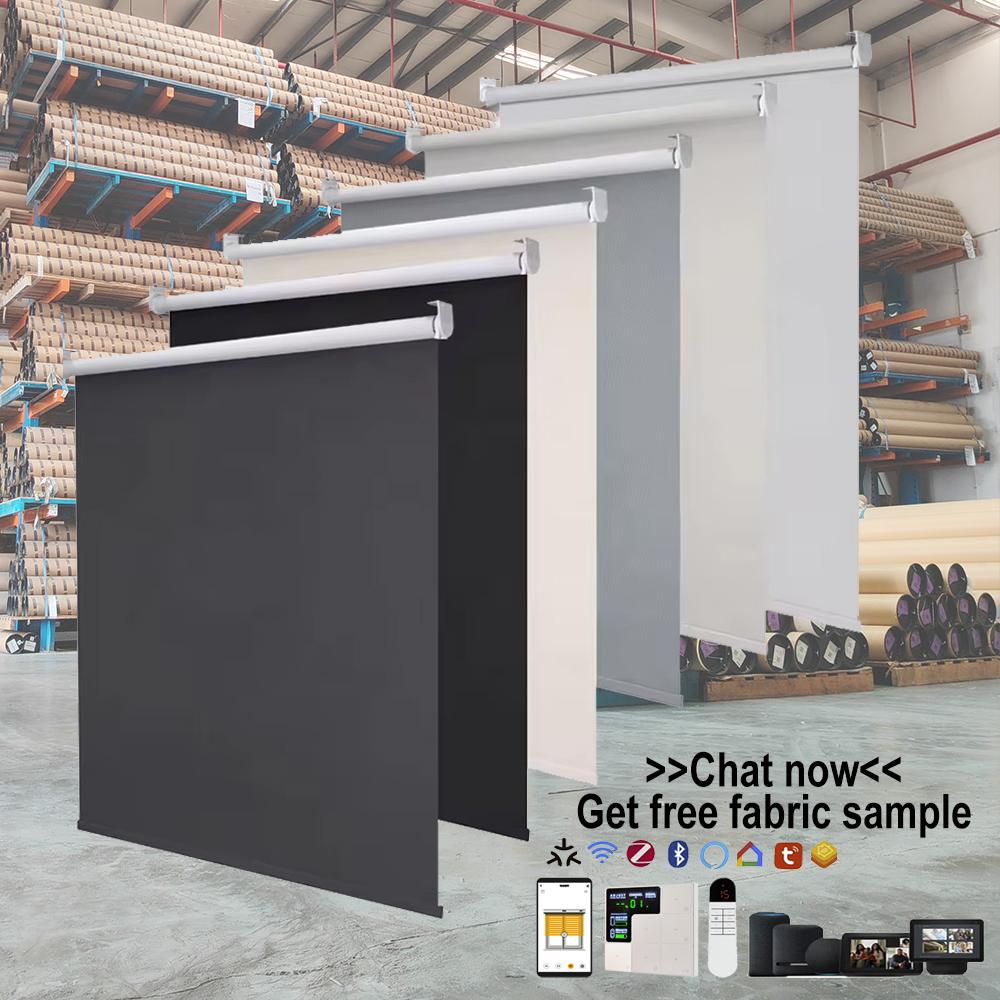
When sunlight hits untreated office glazing, a large share of shortwave solar radiation passes straight through and becomes trapped heat inside the building. This invisible gain forces the cooling system to work harder during shoulder seasons and even mild days, not just peak summer. Facility managers often notice unexplained chiller runtime or warm zones near windows without connecting it to glass performance.
The problem compounds because standard low-e coatings or clear double glazing are tuned for winter heat retention, not solar rejection. A west-facing curtain wall can add 30–60 W per square foot of instantaneous cooling load in late afternoon, pushing the HVAC design capacity beyond what internal loads alone would suggest. That extra capacity means larger chillers, bigger ducts, higher electrical demand charges, and noisier air terminals.
Treating the glass—via spectrally selective films, exterior shading, or replacement with high-performance glazing—cuts the peak load and also stabilizes thermal comfort near the perimeter. The savings show up not only in kilowatt-hours but in fewer hot/cold complaints, reduced fan energy, and the ability to downsize future cooling equipment.
Shade Fabrics That Reduce Glare Without Sacrificing Light
A tightly woven basketweave or a fine basket pattern can break up incoming sunlight before it reaches your eyes, scattering rays across a wider area instead of letting them hit as a single harsh beam. That gentle diffusion keeps the room bright and airy while stripping away the painful squint factor. Fabrics with a low openness factor—somewhere around 3 to 5 percent—tend to hit the sweet spot for east- and west-facing windows, where the sun sits low and direct.
Look for dual-purpose textiles that combine a reflective backing with a softly textured face. The backing bounces a portion of the sun's heat and intensity back outside, while the face lets enough ambient light through to maintain a connection to the outdoors. In practice, this means you can leave the shades down during late afternoon work calls without the screen washing out or the room turning cave-like. Fiberglass and polyester blends with a pearl or metallic finish often outperform plain white vinyl in this regard.
Durable Materials for High-Rise, High-UV Commercial Spaces
For high-rise commercial buildings in sun-intensive climates, material selection is less about aesthetics and more about managing thermal expansion, UV degradation, and wind-driven abrasion over decades. Powder-coated aluminum curtain wall systems, for instance, offer a balance between weight and corrosion resistance, but the quality of the fluoropolymer topcoat determines whether the finish will still hold its color after ten years of direct exposure. Grade 316 stainless steel fasteners and flashings become critical at connection points where moisture and UV combine to accelerate galvanic corrosion.
Glass choices matter beyond visible light transmission. Laminated low-iron glass with a ceramic frit pattern can reduce solar gain while protecting interior fabrics and finishes from fading, but the interlayer must be formulated for high altitude or coastal UV spikes. Fiber cement panels, when installed with ventilated rainscreen gaps, outperform solid cladding in thermal cycling tests because they allow the substrate to dry and expand without cracking. The real durability win often lies in the joints and sealants: high-movement silicone hybrids rated for ±50% joint movement will outlast cheaper polyurethanes in tall facades that flex daily.
What Actually Changes When Chinese Offices Install Better Shades
In Shenzhen’s glass towers, the biggest change after better shades go up is that the 2 p.m. glare stops dictating where people can sit. Instead of taping printer paper over west-facing windows or hiding behind a cubicle wall, employees can keep their monitors angled normally and still read the screen without cranking up brightness. The shift is small but immediate: fewer complaints about eye strain, fewer blinds yanked all the way down, and a workspace that no longer looks like a bunker by mid-afternoon.
Thermal comfort shifts too, though often in ways the thermostat doesn’t show. A decent external shade or double-layer roller cuts the radiant heat hitting perimeter desks, so the office no longer runs a split personality—freezing in the middle, roasting by the glass. Building managers in older Shanghai high-rises find they can hold the AC setpoint steady without triggering afternoon calls about hot desks, because the sun’s heat is stopped before it turns the window bays into radiators.
There’s also a quieter change in how the office feels after 4 p.m. Low-angle sunlight gets filtered instead of blocked entirely, so the room keeps a soft connection to the skyline instead of swapping one harsh glare for a dim cave. In open-plan floors, adjustable fabric shades give people a bit of visual privacy without killing the daylight, which matters more in dense Chinese business districts where neighboring towers reflect light straight into the workstations.
Lessons From Energy Retrofits in Chinese Workspaces
Retrofitting older office blocks in Shanghai or Guangzhou rarely follows the neat playbook of Western energy audits. A common pattern is that building owners replace chillers and lighting first, while leaving leaky window frames untouched—not because they ignore envelope losses, but because tenant fit-outs change every few years and the landlord cannot recover envelope investment through rental premiums. The result is a patchwork of high-efficiency equipment trying to compensate for poorly insulated shells.
Another lesson comes from occupant behavior. In many Chinese workspaces, the “one temperature fits all” approach imported from international green building standards fails in open-plan offices where staff expect warmer winter settings and cooler summer settings than the model assumes. After retrofits, measured energy savings often fall short of predictions—not due to equipment faults, but because occupants override controls, open windows, or bring personal heaters. Successful projects tend to involve facility teams in redesigning zoning and setpoint ranges, rather than locking down the building management system.
Finally, the financing side teaches its own lesson. Energy service companies (ESCOs) in China often bundle retrofits with long-term maintenance contracts, but the savings guarantees are rarely adjusted for changes in occupancy or plug loads. Workspaces that added dense hot-desking or server closets after the retrofit saw baseline drift eat into the projected payback. The more durable wins came from modest, low-tech measures—daylight sensors that actually work, occupancy-based ventilation in meeting rooms, and staff training on how to use blinds—rather than from complex, centralized automation.
FAQ
They use advanced fabrics that reduce solar heat gain and glare, so HVAC systems don't work as hard, which trims energy bills noticeably.
Yes, they are built to measure for wide spans and unusual layouts, with options for motorized controls that sync with building management systems.
Many models use dual-layer or screen fabrics that filter daylight while keeping interiors private from outside view, so you get brightness without exposure.
High-performance polyester blends with reflective coatings and low openness factors tend to block more infrared heat, making them a solid choice for southern regions.
You can go with manual chains, cordless lift systems, or fully automated motors that respond to timers, sensors, or smart building platforms.
Yes, they can support LEED or BREEAM credits by improving thermal comfort, reducing energy consumption, and sometimes using recycled content.
Typically three to five weeks depending on fabric availability and order volume, with express options for tighter project schedules.
Many suppliers offer on-site measurement and professional installation across major Chinese cities, along with post-installation adjustment and warranty support.
Conclusion
In many Chinese office towers, the afternoon sun turns floor-to-ceiling glass into a radiating surface that pushes HVAC systems harder than designers expected. That hidden cooling load, often ignored until energy bills arrive, is one reason facility managers are replacing basic blinds with engineered shades. Newer energy codes and tenant expectations for glare-free workstations have accelerated the upgrade cycle. The best fabrics cut glare enough to keep screens readable without dimming the room into artificial light dependence. And because high-rise windows face constant UV exposure and wind-driven dust, the materials have to be tougher than what works in low-rise residential settings.
When offices actually install these shades, the shift is measurable: fewer hot spots near windows, less frequent compressor cycling, and occupants stop taping paper to the glass. Retrofits in Shenzhen and Shanghai have shown that pairing automated shade controls with existing BMS can reduce cooling demand by double digits without major structural work. Daylight-linked dimming also becomes practical once the fabric diffuses light evenly across the floor plate. The lesson from those projects is consistent—start with the glass, not the chiller. A well-chosen shade fabric does more than block heat; it changes how the whole workspace feels and performs.
Contact Us
Contact Person: Vivien Cheng
Email: [email protected]
Tel/WhatsApp: +86 13751758835
Website: https://www.rollergytech.com/