

DETDA Maker Insights for High-Performance Polyurethane Applications
2026-09-16
Behind every high-performance polyurethane system—whether a precision elastomer, a tough coating, or a fast-curing composite—lies a critical curing agent choice. DETDA (diethyltoluenediamine) has quietly become a workhorse for formulators chasing rapid demold times, superior mechanical properties, and long-term thermal stability. Yet not all DETDA is created equal. We're pulling back the curtain on what truly matters when selecting a DETDA maker, straight from the production floor and lab bench. Because when performance margins get tight, the difference often comes down to the supplier behind the molecule. Fortune brings you the insights that help you formulate with confidence.
Inside the Chemistry That Makes DETDA a Workhorse Curative
DETDA owes its workhorse status largely to the steric and electronic effects built into its molecular backbone. The two ethyl groups sitting on the aromatic ring do more than just decorate the structure—they twist the amine groups out of plane, slowing down the otherwise violent reaction with isocyanates. This built-in delay gives formulators a wider processing window without sacrificing the final crosslink density. Meanwhile, the methyl substituent further tunes the electron density on the ring, softening the nucleophilicity of the amine just enough to prevent runaway exotherms during large-scale casting operations.
What makes DETDA especially reliable is how its liquid state persists at room temperature despite the rigid aromatic core. The asymmetric substitution pattern breaks up the molecular packing that would normally force such a molecule into a crystalline solid. That fluidity translates directly into easier handling, better metering, and more homogeneous mixing in two-component systems. Once the cure begins, the aromatic rings lock into a tight hydrogen-bonded network, producing a glass transition temperature that routinely exceeds 150°C—a number that many aliphatic alternatives can only dream of reaching without post-cure.
Beyond pure reactivity, DETDA's chemistry shines in the way it balances toughness with thermal endurance. The ethyl groups act as internal plasticizers at the molecular level, preventing the crosslinked matrix from becoming overly brittle after thermal aging. At the same time, the aromatic amine linkages resist oxidative degradation far better than their aliphatic counterparts, which is why components cured with DETDA survive long-term exposure to hot oils, fuels, and industrial atmospheres. It is this combination of controllable kinetics, easy processability, and robust final properties that keeps DETDA in the toolbox of polyurethane and polyurea formulators after more than four decades.
Dialing In DETDA Ratios for Faster Demold Without Embrittlement
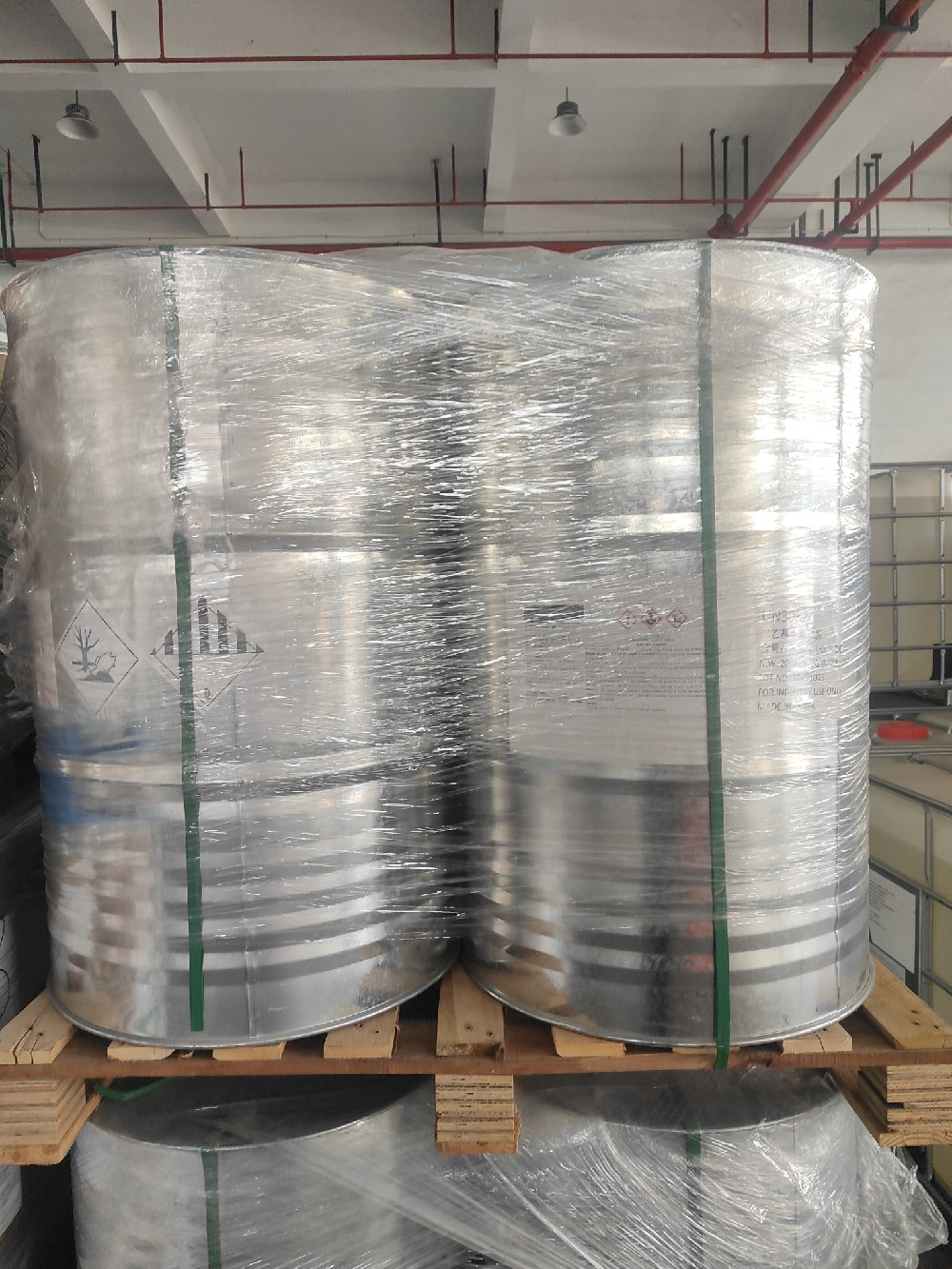
Finding the right DETDA ratio is a balancing act between cycle time and part toughness. Many molders push the curative level above the theoretical stoichiometry to get a faster hardness build and earlier demold. That approach works up to a point, but the extra aromatic amine creates a denser network with less free volume, which shows up as brittleness in thin edges or impact-prone areas. The key is to map the system's response across a narrow ratio range rather than making one big jump.
Start with the stoichiometric ratio from your resin's AHEW and run a series of small batches at plus one, two, and three percent DETDA. Track gel time, Shore D hardness at a fixed interval after mixing, and the exotherm peak. You will often see demold time drop sharply between one and two percent, then level off while brittleness climbs. That inflection point is where you want to operate. If you need more speed beyond that, adding a low-viscosity reactive diluent or a core-shell toughener at five to eight phr can offset the loss in elongation without pushing the curative ratio into the danger zone.
One practical case involved an epoxy tooling board where raising DETDA from 26 to 28 phr cut demold time from 90 to 70 minutes. Impact strength fell by fifteen percent, but blending in six phr of a pre-dispersed rubber modifier brought the toughness back to within five percent of the original while keeping the faster cycle. The lesson is that ratio changes and toughener adjustments should be done together, not sequentially, because the interactions depend on cure kinetics as much as final crosslink density.
What Field Failures Reveal About DETDA-Cured Polyurethane Parts
Field failures in DETDA-cured polyurethane parts rarely point to a single catastrophic defect. More often, they expose a slow accumulation of microcracks radiating from sharp corners and insert edges. These cracks typically follow the line of residual stress left by the exothermic cure, and their orientation suggests that the part was subjected to cyclic loading before the polymer network had fully relaxed. In several recovered components, the fracture surfaces show a brittle, conchoidal pattern near the surface but a more ductile tear deeper in the bulk—evidence that the outer skin aged faster than the core.
Another common finding is color shift and surface chalking on parts exposed to direct sunlight. DETDA-based formulations are known for their sensitivity to UV, and field returns often show a distinct amber-to-brown discoloration that penetrates only the first few hundred microns. This is not merely cosmetic; the oxidized layer loses elongation and acts as a crack initiation site. When such parts are then flexed or impacted, the degraded skin can propagate a crack into the undamaged interior, even though the overall hardness remains within specification.
Perhaps the most instructive failures involve adhesion loss at metal-polymer interfaces. In these cases, the DETDA-cured layer separates cleanly from the substrate, leaving behind a smooth, almost polished surface. Laboratory analysis of the failed bond line usually detects a thin film of amines or carbamates that migrated during cure. This suggests that the mixing ratio or cure temperature was slightly off, causing unreacted curative to concentrate at the interface and weaken the bond over time under humid conditions.
Choosing Between Liquid and Solid DETDA Grades for Your Process
Liquid DETDA is often favored in processes where rapid mixing and consistent dispersion matter most. Its lower viscosity at room temperature makes it easier to pump and meter, especially in continuous production lines. If your operation relies on automated blending or you’re running at lower processing temperatures, liquid grade typically gives you fewer headaches during handling. The trade-off is that some liquid formulations can be more sensitive to moisture, so you’ll want to keep storage conditions tight.
Solid DETDA, on the other hand, brings its own set of advantages for batch operations that run hot. The flake or pastille form is generally more shelf-stable and less prone to absorbing water, which can be a real bonus if your facility has limited climate control. Many processors find that solid grade allows for easier long-term storage and simpler inventory management, though you’ll need to account for the melting step before it can be blended into your system. This extra step can slow things down, but it also gives you a chance to verify purity and avoid the kind of separation you sometimes see in liquid drums that have sat too long.
The decision often comes down to your specific mixing setup and how much prep time you can absorb. If you’re running a high-throughput line with inline blending, liquid DETDA usually wins on convenience. For smaller batches, high-temperature curing, or long storage intervals, solid grade tends to be more forgiving. Some formulators even keep both on hand and switch based on seasonal humidity or production schedule changes. There’s no universal right answer, just the one that fits the practical constraints of your floor.
How Leading Shops Reduce Scrap with DETDA Temperature Profiling
Leading shops treat DETDA temperature profiling as a live diagnostic tool, not a one-time check. Thermocouples placed at the part's thickest and thinnest sections feed data to a central logger every few seconds. This reveals how the exothermic reaction moves through the material and where the temperature deviates from the ideal cure window. Operators then adjust mold heating zones or alter the DETDA ratio slightly to keep the entire part within a tight thermal band. The result is fewer under-cured or scorched parts that would otherwise end up in the scrap bin.
A major source of scrap with DETDA systems comes from uneven heat buildup during the cure. By mapping temperature curves across multiple production runs, shops can spot recurring cold spots caused by poor mold contact or insufficient preheating. Some teams go further and overlay temperature data with post-cure hardness tests to define the exact thermal profile that yields consistent mechanical properties. When the profile drifts—say, due to a worn heater or a new batch of DETDA—the data triggers an alert before parts are even demolded, allowing corrections that keep scrap rates below one percent.
The most advanced operations link DETDA temperature profiling directly to their quality management system. Each part carries a traceable record of its cure cycle, including peak exotherm temperature and time above critical thresholds. If a customer reports a field failure, engineers pull the profile and compare it to the approved envelope. This closed loop doesn't just reduce scrap; it prevents entire lots from being shipped when the thermal signature falls outside the validated range. Over time, the accumulated profile data also guides mold redesigns and heating element upgrades, further tightening the process.
DETDA in High-Impact Applications: Lessons from Mining and Marine
In mining operations, DETDA-cured polyurethane and polyurea linings face a brutal combination of abrasive slurries, impact from falling ore, and constant exposure to water with fluctuating pH. Field teardowns of failed pump casings and classifier screens show that while DETDA dramatically raises tensile strength and cut resistance compared to standard diamine curatives, improper mixing or slight stoichiometric drift leads to hard spots that crack under repeated hammering. One lesson stands out: preheating the curative to 35–40°C and controlling the pot life window prevents the brittle zones that otherwise appear in thick-section pours.
Marine environments add a different stress profile. DETDA-based elastomers on dock fenders, propeller shaft bearings, and subsea cable bend stiffeners must resist saltwater absorption, barnacle adhesion, and fatigue from wave-induced flexing. Real-world inspections reveal that the aromatic ring structure in DETDA provides excellent hydrolytic stability, but ultraviolet exposure will chalk and micro-crack the surface unless hindered amine light stabilizers are blended into the formulation. A practical trick from shipyard maintenance crews is to over-cure by 10–15% at slightly lower temperature, which improves the glass transition stability without sacrificing elongation.
Across both sectors, the recurring theme is that DETDA's fast reaction profile demands discipline with processing windows. Mining repairs done in humid, dusty conditions often fail not from chemical incompatibility but from moisture contamination during spray application, which creates foamy, weak interfaces. Marine applications show that success comes from balancing reactivity with adequate working time for large-area coatings. The hardest lesson learned is that DETDA should not be treated as a drop-in replacement for slower aromatic diamines; instead, formulators need to adjust prepolymer NCO content upward and use a two-stage temperature ramp to avoid exothermic runaway in deep molds.
FAQ
The aromatic ring structure gives the cured network much higher stiffness and heat deflection, and the liquid form lets it blend into prepolymer without aggressive heating. That combination of easy mixing and a rigid final part is hard to match with aliphatic options.
Thick-section elastomers, mining screens, industrial rollers, and high-abrasion liners. Those parts see repeated impact and cutting wear, and the diamine-extended hard segments keep tear strength and modulus up even when temperatures climb.
It typically gives a somewhat longer working window than faster methylene dianiline derivatives at the same temperature, but once the reaction kicks off the exotherm is sharp. Formulators often lower the initial mix temperature to avoid a runaway gel in large pours.
Moisture sensitivity shows up as micro-bubbles or surface haze because the amine reacts with water faster than with isocyanate. Keeping the prepolymer and the curative sealed and dry, and degassing right after mixing, prevents most of those defects.
Yes, and the benefit is rapid property development without sacrificing elongation too much. Spray systems can be tuned with softer polyol backbones, so the DETDA hard segments contribute tensile strength while the soft segments still allow enough stretch for concrete movement.
In many cases it can, especially where a liquid curative simplifies handling and lowers processing temperature. The trade-off is usually a slightly more brittle hard segment network, so formulators may rebalance the prepolymer NCO level or add a small amount of plasticizer to keep impact resistance acceptable.
The densely packed aromatic hard domains restrict swelling, so the part holds dimensions and hardness better than polyether or polyester systems cured with aliphatic amines. This is a useful property in hydraulic seals, gaskets, and engine mounts.
Conclusion
DETDA's role as a workhorse curative in high-performance polyurethane hinges on its unique amine structure, which delivers rapid chain extension without sacrificing thermal stability. Shops that master the stoichiometry can push demold times down sharply, but the margin between a faster cycle and an embrittled part is narrower than many realize. Field failures from cracked bushings and split seals often trace back to over-indexing the curative or ignoring moisture contamination during mixing, not to the base chemistry itself. Those hard-won lessons have pushed formulators to treat DETDA ratios as a process variable to be dialed in per mold geometry, rather than a fixed recipe line.
Choosing between liquid and solid DETDA grades is less about purity and more about how the material feeds into your specific dispensing setup; liquid grades simplify heated lines, while solid flakes can reduce volatiles in open-mold work. Temperature profiling has become the quiet lever for scrap reduction, with leading shops mapping exotherm curves to avoid hot spots that weaken buried sections. In mining and marine environments, where parts face abrasive slurries, salt water, and impact loads, the same DETDA-cured polyurethane proves its toughness only when cure schedules and post-cure steps are tightly controlled—otherwise the field tells you what the lab missed.
Contact Us
Contact Person: WANG SIHAI
Email: [email protected]
Tel/WhatsApp: +86-13815295628
Website: https://www.fortunechemtech.com/index_en.html