

GH4169 Seamless Pipe Wholesaler for Critical Industrial Applications
2026-10-30
When your operation depends on GH4169 seamless pipe for extreme temperatures, pressure, or corrosive environments, 'good enough' sourcing simply won't cut it. That's why forward-thinking engineers turn to a specialist wholesaler like JILAIDA, where critical industrial applications aren't just a checklist—they're the entire focus. Here's what to look for in a partner who can deliver the consistency and traceability your next project demands.
When Standard Alloys Can't Take the Heat
Most off-the-shelf alloys are never meant to hold their shape near a glowing exhaust stream. Carbon steel loses strength steadily past a few hundred degrees, while even 316 stainless begins to creep and scale aggressively beyond 600°C. The combination of high stress and oxidation quickly turns standard material choices into a maintenance headache.
Superalloys built around nickel or cobalt change that picture. They rely on ordered precipitate phases that stay stable at temperature, plus chromium and aluminum additions that form tenacious oxide films. That gives them a fighting chance in turbine sections, rocket nozzles, and high-performance valves where a standard alloy would sag or burn away.
Still, no single alloy solves every hot-end problem. Above about 1050°C, even the best nickel superalloy is near its limit, and designers have to weigh coatings, cooling channels, ceramics, or refractory metals. Material selection becomes a balancing act between short-term strength, long-term oxidation resistance, and how much dimensional change a component can tolerate before it fails.
Inside the Forge: How GH4169 Gets Its Strength
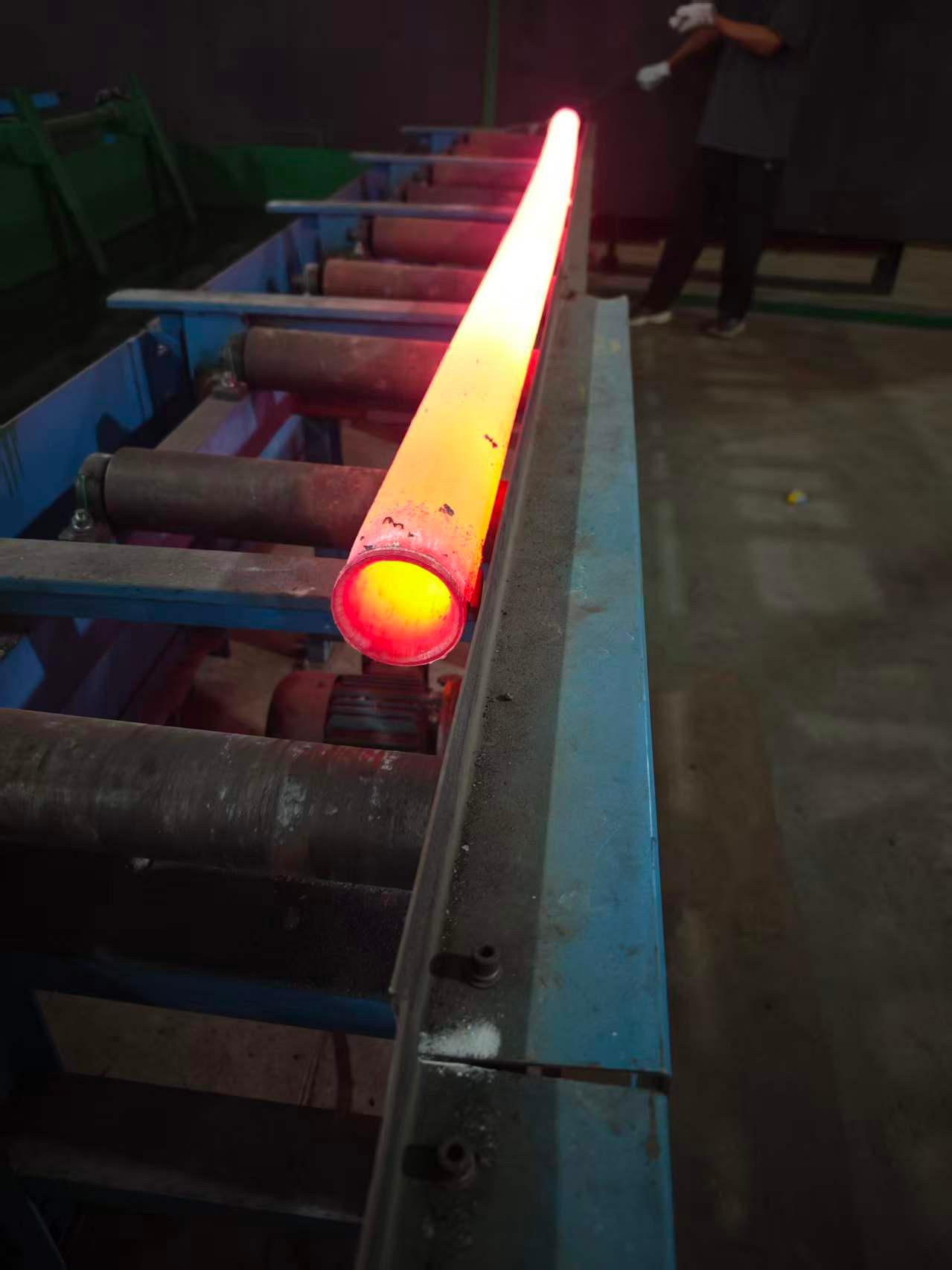
Inside the forge, GH4169's reputation begins with its stubborn refusal to yield under heat and stress. The alloy's backbone is a nickel-chromium matrix that resists oxidation while staying tough at temperatures where lesser steels turn soft. But the real alchemy happens when niobium, titanium, and aluminum are coaxed into forming coherent precipitates—gamma double prime and gamma prime—during controlled forging and aging. These particles, only tens of nanometers wide, pin dislocations so effectively that the metal behaves more like a ceramic composite than a conventional superalloy.
The forge itself is not just a shaping step; it's a deliberate insult to the grain structure. Careful hammering below the recrystallization temperature tears the coarse cast dendrites into a fine, tangled web of grains, each one bristling with deformation twins. Later heat treatment allows partial recrystallization, leaving a duplex grain size that balances creep resistance with low-cycle fatigue strength. This is why GH4169 forgings are rarely simple bars—they are often designed with near-net shapes to preserve the forged texture that gives the alloy its stubborn durability.
What sets GH4169 apart from similar alloys like Waspaloy or Rene 41 is its tolerance for sluggish cooling. The gamma double prime phase precipitates over a wide temperature window, so even thick sections can be uniformly strengthened without the risk of cracking from thermal shock. This forgiving kinetics, combined with a high molybdenum content that slows diffusion, means the forging can be done in open dies by craft shops, not just in vacuum arc remelting chambers. The result is a material that holds its strength at 650°C while still being weldable and machinable—a rare compromise that keeps it on the spec sheet for turbine disks, fasteners, and downhole tools where a failure is measured in millions of dollars.
The Real Cost of Inconsistent Seamless Pipe
Inconsistent seamless pipe doesn't just create a headache on the shop floor—it quietly drains your bottom line long after the initial purchase. When wall thickness varies by even a few thousandths of an inch, every downstream operation pays the price. Machinists slow down to compensate for unpredictable material behavior, welders rework joints that refuse to seat properly, and inspectors flag parts that should have passed the first time. What looks like a bargain on the invoice often becomes the most expensive pipe in the plant.
The hidden costs surface in ways that never make it into a standard procurement report. Pressure ratings assume a uniform cross-section, but real-world pipe with eccentric walls forces engineers to overdesign just to be safe. That means thicker schedules, heavier supports, and more material than the job actually requires. Then there's the matter of field failures: a single burst pipe in a remote location can cost fifty times the original pipe price in downtime, labor, and lost production. Consistency isn't a luxury—it's the cheapest insurance you can buy.
Smart buyers eventually learn to read the true price tag. They ask about the mill's process controls, not just the quoted cost per ton. They request full-length ultrasonic test reports instead of a sample certificate. They understand that every inconsistent joint is a future callback waiting to happen. Over a ten-year service life, the difference between tightly controlled seamless pipe and run-of-the-mill product isn't a percentage point—it's often the difference between routine maintenance and emergency replacement.
What a Wholesaler Should Know About Your Operating Conditions
When a wholesaler asks about your operating conditions, they are not making small talk or filling out a routine checklist. They are trying to figure out whether your business can handle their volume, meet their delivery windows, and survive the inevitable hiccups that come with moving product at scale. Sharing only polished summaries rarely helps. Instead, walk them through the real constraints: your facility’s receiving hours, how you manage dock scheduling, whether you have cold storage or just ambient warehousing, and what your team does when a shipment arrives damaged or mislabeled. The more honestly you describe these mechanics, the faster a wholesaler can flag potential friction points before they turn into chargebacks or lost inventory.
Another area wholesalers care deeply about is your order cutoff logic and your ability to absorb sudden demand shifts. If you only process orders twice a week, say so plainly and explain why that rhythm works for your operation. If you rely on a third-party fulfillment partner during peak season, mention that too, along with the lead time changes a wholesaler should expect. This kind of transparency does not make you look small or disorganized—it makes you predictable. And predictability is what wholesalers pay a premium for, because it lets them plan their own downstream promises to retailers without gambling on your back-end chaos.
One often-overlooked detail is how you handle returns, recalls, and product holds. A wholesaler will eventually need to pull a batch due to a labeling error, a temperature excursion, or a quality complaint. If you can describe your lot tracking system, your quarantine process, and how quickly you can isolate affected units, you immediately stand out from suppliers who only talk about features and pricing. Give concrete examples—like the time you contained a packaging defect within six hours and issued credit notes the same day—instead of vague assurances. That level of operational candor builds the kind of trust that turns a first order into a long-term contract.
Traceability That Follows Every Pipe Back to the Billet
Every length of pipe we deliver carries a story that starts long before it reaches your site. Through a systematic marking and recording process, each pipe can be traced to the exact heat number, production batch, and the original billet from which it was formed. This isn't just about compliance—it's about giving you confidence that the material in your hands has a verifiable lineage, from the melt shop to the final threading.
Our traceability system links physical markings to digital records, allowing quick retrieval of chemical composition, mechanical test results, and dimensional inspection reports. When a question arises on site, you don't have to guess or wait days for answers. The data trail is complete, coherent, and accessible, ensuring that every pipe's history is as clear as its surface.
From the first pour to the last inspection, nothing is left to assumption. The billet identity remains embedded in our documentation, and every processing step—piercing, elongation, heat treatment, straightening, and cutting—is logged against that original identifier. This end-to-end visibility means you can install with assurance, knowing that what you specified is exactly what arrived.
Inventory Depth for Projects That Can't Wait
Most suppliers can show you a catalog full of options, but when a job site grinds to a halt because one part is missing, breadth is worthless. Inventory depth means stocking enough units of the items contractors actually reach for under deadline pressure—not just a demo unit or a drop-shipped promise. It's the difference between pulling ten identical junction boxes off the shelf this afternoon and waiting four days for a transfer from a regional warehouse.
Depth also changes the math on last-minute changes. A project that doubles in scope on Wednesday shouldn't force you to re-source half the material list by Friday. When a distributor carries real quantities—reels of cable, pallets of fittings, stacks of conduit—you can adjust on the fly without creating a secondary procurement crisis. That buffer isn't accidental; it's built by tracking repeat demand patterns and refusing to let high-velocity SKUs drop to zero.
Urgency doesn't pair well with fragile supply chains. The warehouses that serve contractors well are the ones that treat stockouts as a failure, not a forecast error. They reorder before the shelf is empty, hold safety stock on items with erratic lead times, and understand that "available" means physically on hand, not "available from our vendor." For projects that can't wait, that distinction shows up in every hour saved.
FAQ
GH4169 combines high tensile and creep-rupture strength with excellent resistance to oxidation and chloride stress-corrosion cracking. Its precipitation-hardened microstructure stays stable across a wide temperature range, which is why it holds up in jet engine components, downhole tools, and high-pressure chemical lines where a sudden failure is not an option.
A serious wholesaler tracks every heat number, stores pipe indoors with protective end caps, and works only with mills that follow strict melting and forging protocols. They also run periodic independent lab checks for grain size and hardness so that a pipe ordered six months later behaves the same as the first batch.
Yes, that combination is exactly where it excels. GH4169 retains meaningful yield strength up to around 700°C and resists creep deformation under sustained stress, so it can manage superheated steam, sour gas, or turbine bleed air without losing dimensional stability.
Aerospace engine and airframe builders, oil and gas service companies for downhole and subsea hardware, power generation plants, and nuclear component suppliers are the main buyers. Some specialty chemical and marine engineering firms also use it when standard stainless steel grades cannot survive the service environment.
Look for verifiable mill test reports, full traceability from raw material to finished pipe, and the ability to supply exact wall thickness and length tolerances. It also helps if the wholesaler has experience with project-specific documentation such as PMI testing or third-party inspection, which cuts down on delays during qualification.
Each lot should come with a material test certificate showing chemical composition, mechanical properties, and heat treatment condition. For critical service, buyers often request ultrasonic or eddy current testing, positive material identification, and sometimes hydrostatic testing. A wholesaler who understands these requirements will have the paperwork ready before shipping.
One frequent mistake is focusing only on price per kilogram and ignoring dimensional tolerances or surface finish, which can drive up machining costs later. Another is assuming all GH4169 is identical: heat treatment and cold working levels vary, and a pipe that is merely marketed as GH4169 equivalent may lack the exact property balance required for a critical part.
Compared to alloys like 625 or C-276, GH4169 offers significantly higher strength at elevated temperatures, although it may trade some corrosion resistance in very aggressive acids. For applications where mechanical load and thermal cycling dominate, GH4169 is often the more cost-effective choice because thinner walls can carry the same stress, reducing weight and material usage.
Conclusion
In critical industrial settings, off-the-shelf alloys often fail before the first inspection cycle. GH4169 seamless pipe steps in where temperature, pressure, and corrosive media push conventional materials past their limits. The alloy's performance isn't accidental; it comes from controlled melting and forging processes that refine grain structure and precipitation hardening. That metallurgical discipline translates into creep resistance and fatigue strength that hold up long after standard grades would need replacement. But the material is only half the story. Inconsistent wall thickness, poor concentricity, or hidden inclusions in seamless pipe can create stress risers that turn a routine shutdown into an unplanned failure. A wholesaler who treats every heat as a potential liability—rather than a commodity—will reject the lots that look fine on paper but fall short under real operating loads.
A capable GH4169 seamless pipe wholesaler does more than stock sizes. They ask about service temperature, cyclical loading, exposure to chlorides or sulfides, and whether the pipe will be welded into a larger assembly. Those details determine the appropriate heat treatment condition and dimensional tolerances. Traceability matters just as much: every pipe should be tied back to the original billet and heat number, so if a problem ever surfaces, you're not left guessing which section of the line is suspect. Finally, inventory depth separates serious suppliers from brokers. Projects running behind schedule cannot wait eight weeks for a mill run; having common diameters and wall schedules already in the warehouse means the difference between staying on plan and paying for idle crews. A wholesaler who combines metallurgical knowledge, honest traceability, and ready stock becomes an extension of your own engineering team rather than a simple source of metal.
Contact Us
Contact Person: Chenji Li
Email: 521 Zhonghui Road, Huishan Economic Development Zone
Tel/WhatsApp: +86 83112233
Website: https://www.jldnickelalloy.com/