

Low-Dew-Point Wheel Desiccant Dehumidifier Unit Supplier You Can Rely On for Precision Moisture Control
2026-10-26
What does it actually take to hold a -40°C dew point without fluctuation? If you’re running battery dry rooms, pharmaceutical packaging, or precision optics, the answer isn’t just any dehumidifier—it’s a low-dew-point wheel desiccant dehumidifier unit engineered for tight control. But the unit is only half the story. Without a supplier you can rely on for precision moisture control, even the best machine can become a liability. That’s why teams across demanding industries trust ROTER to deliver desiccant rotor technology that keeps moisture exactly where it should be—nowhere near your product. In this post, we’ll look at what makes ROTER’s low-dew-point systems different and why that difference shows up in your yield, not just your spec sheet.
Dew Point Numbers Don't Lie: Verifying Ultra-Low Moisture in Real Time
When you're chasing single-digit dew points in a process stream, every fraction of a degree matters. A sensor that drifts by half a degree might still look fine on a trend chart, but it's quietly undermining your dryness spec. That's why some engineers have stopped trusting the display and started cross-checking against a chilled-mirror reference. If the numbers don't match within your tolerance band, you're not measuring moisture—you're measuring hope.
The real challenge with ultra-low moisture isn't just the sensor's accuracy; it's the lag. Many installations report a dew point that's minutes or even hours behind the actual gas condition, especially after a regeneration cycle or a change in line pressure. Real-time verification means sampling the same gas at the same point and watching the response curve, not just the steady-state reading. Once you see how quickly a high-quality optical hygrometer settles, you'll never trust a slow-responding transmitter again.
One plant we worked with discovered their dryer was cycling far more often than necessary because the online dew point meter was reading 10°F high. They installed a portable reference unit, logged data side-by-side for a week, and then recalibrated the online unit. Energy savings paid for the reference instrument in under three months. The lesson? Ultra-low moisture verification isn't a luxury—it's a cost-control tool that happens to live in your instrumentation budget.
A Wheel That Keeps Turning: Rotor Engineering for Years of Stable Output
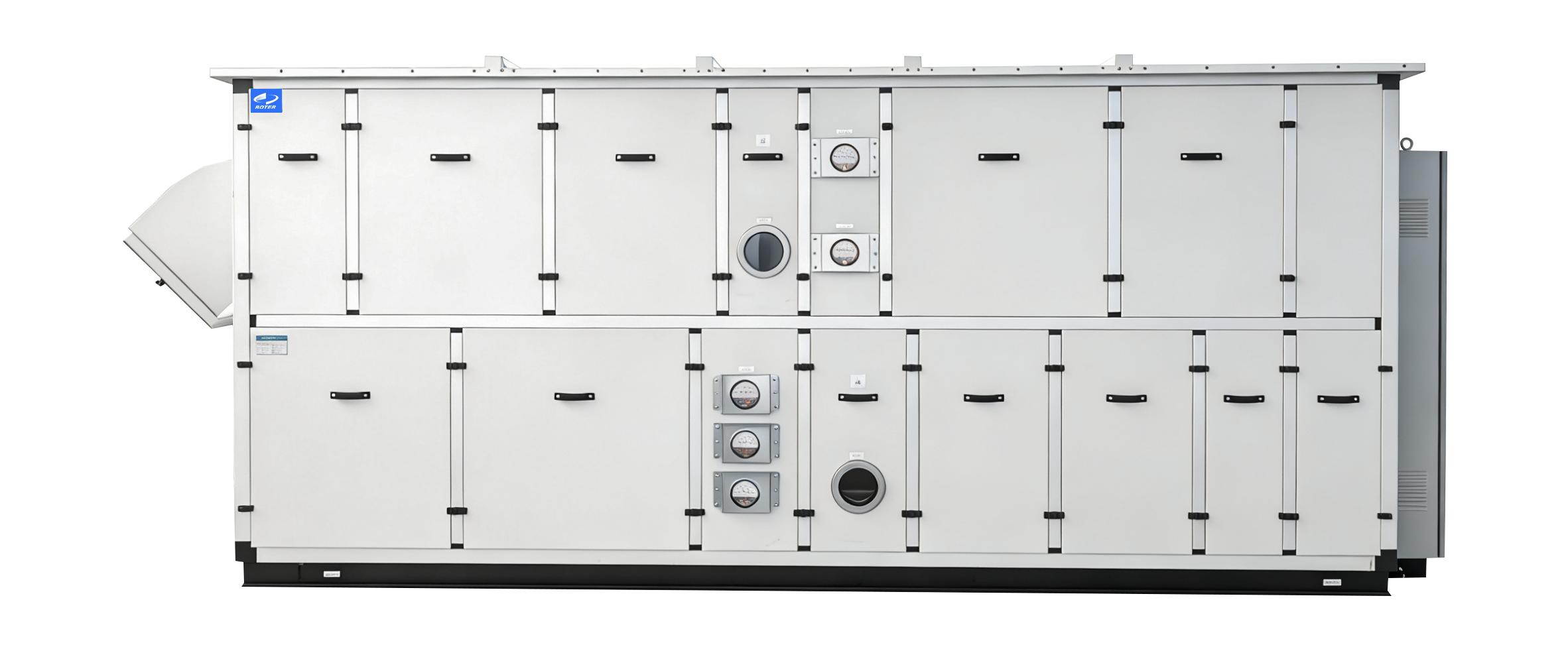
Rotor design is rarely the first thing people think about when a machine hums along without complaint, yet it sits at the very core of long-term reliability. The subtle choices in bearing preload, shaft straightness, and dynamic balancing don’t reveal themselves on day one. They show up three years later, when the same rotor still spins without a whisper of wobble. Getting there means treating every micron of runout as a failure waiting to happen, and every thermal expansion coefficient as a promise you make to the future.
One underappreciated lever is material pairing. A rotor forged from a single alloy may look elegant on paper, but real-world stability often comes from deliberate mismatch: a shaft that expands slightly less than its housing, a lamination stack that breathes with temperature instead of fighting it. Engineers who chase decades of service don’t just pick strong materials—they pick materials that age well together. That’s why some rotors outlast the machines they were designed for, while others need replacement bearings after a single harsh season.
Then there’s the question nobody asks in the brochure: what happens when load changes suddenly? A rotor that’s perfectly stable at full speed can still crack under a cold start or a jammed output. Stable output isn’t about surviving the ideal case; it’s about surviving the messy, repetitive, slightly unpredictable reality of daily operation. The best rotor engineering accounts for that mess—not by adding weight or stiffness, but by designing in just enough compliance to let the system find its own equilibrium. That’s the difference between a wheel that spins and a wheel that keeps turning.
When Standard Dry Air Isn't Enough: Matching Systems to Critical Loads
Standard dry air systems are designed around average building loads and typical occupancy patterns. But in facilities where a single point of failure can stop production or compromise safety, that baseline approach falls short. Medical suites with MRI scanners, data centers with high-density racks, and cleanrooms for pharmaceutical compounding all generate heat and moisture profiles that shift rapidly and demand a response that generic systems simply cannot provide. A conventional unit sized for a peak summer afternoon may leave sensors, lasers, or analytical instruments vulnerable the moment internal loads spike unexpectedly.
The trouble is not just capacity; it is the shape of the load. Critical environments often have tightly coupled equipment that creates sharp, localized demands. A surgical robot idling at low power for hours can surge during a procedure, while a server cluster undergoing a batch-processing job pushes dry, hot exhaust into adjacent aisles. Matching a system to these loads means mapping each zone's real-time thermal signature rather than relying on a single return-air sensor. That requires modular cooling and dehumidification components that can be staged on and off without destabilizing the room's dew point.
Experience from existing installations shows that the most resilient solutions pair redundant air handlers with close-coupled units placed directly at the heat source. Instead of forcing all air through one oversized duct network, the design allows small, high-precision devices to react within seconds while the main system handles baseline conditions. This layered strategy keeps supply air within a narrow band of temperature and humidity, protects equipment from condensation risk, and avoids the energy waste of running every compressor at full load just to satisfy one hot aisle.
One Size Fits No One: Why Modular Configurations Make the Difference
Rigid, monolithic setups collapse the moment requirements shift even slightly. A single preset might handle a narrow use case perfectly, but it buckles under edge cases, integrations, or scaling demands. Modular configurations sidestep that fragility by letting you swap, add, or remove components without reworking the entire system.
The real payoff arrives during iteration. When teams can isolate a payment processor, a storage layer, or an authentication flow as its own module, they test changes faster and deploy with far less risk. You stop paying the tax of “everything depends on everything else” and start making choices that fit the actual problem in front of you.
That flexibility also extends to user-facing products. Customers rarely align with a single persona. Modular options let you tailor onboarding, feature sets, and interface density per segment—without maintaining separate codebases. The result is a configuration that feels purpose-built rather than roughly approximated.
Regeneration Without Regret: Lowering Energy Costs in Deep Drying
Deep drying processes often treat sorbent regeneration as a fixed thermal load, releasing hot purge air directly to exhaust. That habit hides a large cost: by routing the regeneration exhaust through a heat recovery loop, you can preheat incoming wet material or pre-dry the sorbent bed before the next cycle. Plants that close this loop typically see a 15–30% drop in energy per unit of dried product, without any loss in final moisture control.
A more overlooked lever is staged regeneration. Instead of running one long high-temperature purge, split the cycle into heating, desorption, and cooling windows, then adjust each window’s duration and airflow based on the actual moisture load of the sorbent. This avoids over-regeneration, where the bed is already dry but still being swept by hot gas. One industrial drying line cut natural gas use by about 12% simply by shortening the over-purge phase, with no change to product quality.
The choice of regeneration method also shapes whether the investment feels regret-free. Mildly heated regeneration adds a small energy input compared to heatless cycles, but it drives the dew point much lower, reducing downstream condensation and re-drying work. Pairing that with a dew point sensor that triggers the regeneration heater only when needed, rather than on a fixed timer, further lowers both energy use and sorbent replacement frequency. The result is a deep drying line where energy cost per kilogram trends downward instead of staying flat.
Engineers on Call: Support That Extends Beyond Equipment Delivery
When a packaging line halts at 2 a.m., the last thing you need is a phone tree. Our engineers answer directly, often from the same region as your facility, with hands-on knowledge of the machines they helped install. They don't just walk you through a manual; they pull up your system's history, diagnose remotely, and if necessary, drive over with the right parts already in the van.
This support continues long after the delivery paperwork is signed. Whether it's a custom retrofit, an unexpected material change, or a recurring fault that no one else could pin down, you get the same engineer or a small dedicated team who already know your line's quirks. They're empowered to make decisions on the spot—no escalating through layers, no waiting for a callback.
We've had calls that started with a strange vibration and ended with a redesigned bracket shipped the same week. Others turned into on-site training sessions for new operators. The point is simple: the equipment is only half the purchase. The other half is knowing someone will pick up when it matters.
FAQ
Instead of cooling air to condense moisture, it passes air through a slowly rotating desiccant wheel that adsorbs water vapor at a molecular level. That lets it keep working efficiently below freezing dew points, often down to -40°F or lower, where conventional coils freeze or lose capacity.
Battery dry rooms, pharmaceutical production, candy and snack coating, cold storage docks, ice rinks, and any process where even a thin layer of condensation ruins product or slows production. These units handle both low humidity and low temperature without the ice buildup you would get from cooling coils.
Because small swings in dew point can scrap an entire batch. A supplier that understands airflows, regeneration temperatures, and sensor placement will deliver a unit that holds a tight setpoint instead of one that overshoots and then overcorrects. You also want fast parts and service when a process cannot stop.
The desiccant wheel is divided into process and regeneration zones. As moist air passes through one section, the desiccant captures water vapor; in another section, heated air drives the moisture off so the wheel can keep adsorbing. This continuous cycle avoids saturation and lets the system deliver very dry supply air consistently.
Look at the required dew point, inlet air conditions, regeneration energy source, and whether the casing and seals are designed to prevent air leakage between wet and dry streams. Also ask about turndown capability, because many processes do not run at full load all day and a fixed-speed unit wastes energy.
Yes, they often work as a pre-conditioning stage or a dedicated dry-air loop. For example, a unit might treat outside air down to a low dew point before it enters a clean room's air handling system, reducing the load on local cooling coils and preventing condensation on cold surfaces.
Inspect the desiccant wheel for dust or chemical fouling, check belt tension or drive motor, clean or replace regeneration filters, and verify sensors against a calibrated dew point meter at least twice a year. Small leaks in the regeneration duct can also raise the supply dew point without showing an obvious fault.
Conclusion
In precision manufacturing and critical storage environments, the gap between acceptable and compromised often comes down to a few degrees of dew point. A dependable low-dew-point wheel desiccant dehumidifier supplier understands that verification is not a marketing claim but an operational necessity. Real-time dew point readings, not assumptions, confirm that ultra-low moisture conditions are being held. Behind those numbers sits rotor engineering built for endurance — desiccant wheels that maintain their adsorption capacity through years of continuous rotation, ensuring stable output without sudden drift. When standard dry air systems fall short, the supplier’s role shifts from equipment vendor to process partner, matching each unit to the actual load, whether that means a cleanroom, a lithium battery dry room, or a pharmaceutical isolator.
Yet even the most robust wheel cannot overcome a poorly configured system. Modular configurations allow engineers to size airflow, regeneration heat, and pre-cooling stages to the exact moisture load rather than forcing a one-size-fits-all package. Regeneration, often the hidden energy drain, can be optimized through heat recovery and variable-speed drives, lowering operating costs without sacrificing dew point performance. Finally, support does not end at delivery. Engineers who can answer questions about saturation curves, wheel replacement intervals, or seasonal humidity swings provide a level of confidence that goes beyond a datasheet. For facilities where moisture control defines product quality and safety, choosing a supplier with that combination of verified performance, modular design, energy awareness, and accessible engineering support is the difference between maintaining a setpoint and truly controlling the process.
Contact Us
Contact Person: Rhea
Email: [email protected]
Tel/WhatsApp: +8618800560886
Website: https://www.rotorairtech.com