

How Does IP67 Dustproof and Waterproof Design Benefit Field Users?
2026-10-29
A field technician is sampling water from a river bank during a light rain. The Pocket Meters in his hand shows a pH reading that drifts by 0.4 units over five minutes. He dries the meter with a cloth, but the reading does not stabilize. Back at the workshop, the meter is opened, and water droplets are found on the circuit board. The seal at the sensor connector had been left slightly open after the last calibration. The instrument was not defective. It was not protected against the water that entered through the connector. This is the situation that IP67 design is intended to prevent. This guide explains what IP67 actually guarantees and how it benefits field users.
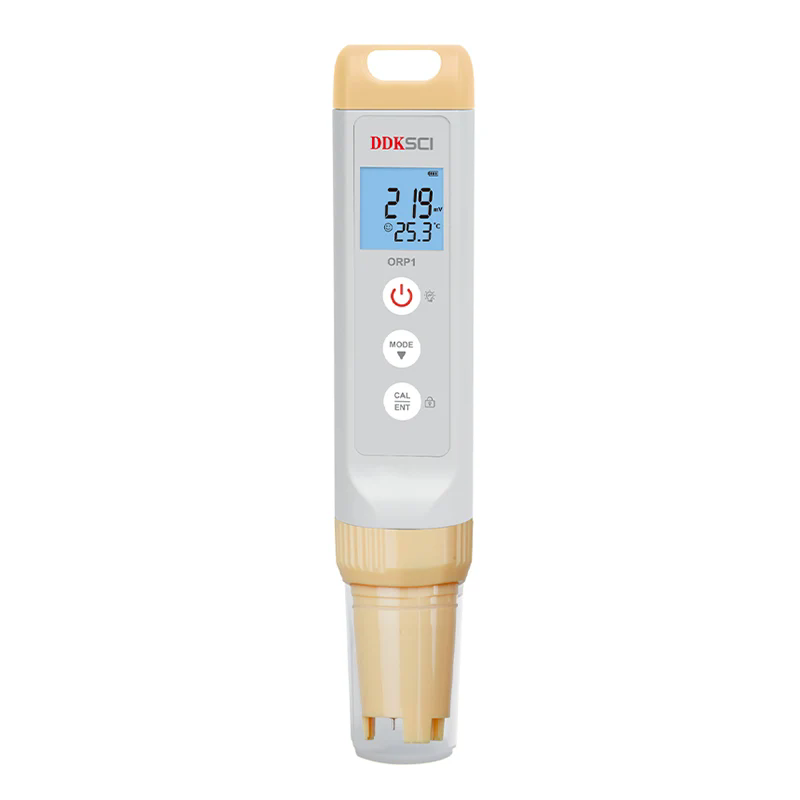
1. What Actually Happens to a Non-Sealed Meter in Rain, Dust, and Mud?
A field instrument faces three attack paths. The first is liquid water from rain, splashing, or accidental immersion. Water on the circuit board causes short circuits, corrosion of the connector pins, and drift in the analog measurement circuit. The second is solid particles. Dust, sand, and mud enter through gaps in the housing and the keypad. The particles abrade the seals and block the sensor junction. The third is condensation. When the instrument moves from a cool outdoor environment to a warm vehicle or a humid cabinet, moisture condenses inside the housing. The condensation corrodes the electronics even when no liquid water enters. A meter that is not sealed will fail in one of these three ways within a few months of regular field use. In our factory, we manufacture Pocket Meters with sealed housings for field service. Shanghai DDK Scientific Instruments Co., Ltd. has been manufacturing field instruments for over 15 years.
The failure is often not immediate. The meter may continue to work with a small offset that the technician does not notice. The offset grows over time, and the calibration becomes unstable. The user blames the sensor, but the root cause is the moisture inside the housing.
2. What Do the Two Digits of IP67 Actually Guarantee for a Field Instrument?
The IP rating is defined by IEC 60529. The first digit indicates protection against solid particles, and the second digit indicates protection against water. In IP67, the first digit is 6, which means dust tight. No dust enters the enclosure when it is tested in a dust chamber for eight hours. The second digit is 7, which means protection against temporary immersion. The enclosure is immersed in water at a depth of 1 meter for 30 minutes, and no water enters in a harmful quantity. The table below compares IP67 with the other ratings commonly found on field instruments.
| IP rating | Dust protection | Water protection | Suitable field scenario |
| IP54 | Limited dust ingress | Splashing water | Light indoor or sheltered outdoor use |
| IP65 | Dust tight | Water jets | Outdoor use with hose cleaning |
| IP67 | Dust tight | Temporary immersion (1 m, 30 min) | Rain, mud, accidental drop into water |
| IP68 | Dust tight | Continuous immersion (depth and time by agreement) | Permanent underwater use |
The IP67 rating does not mean that the instrument can be used underwater for extended periods. It means that a temporary immersion, such as dropping the meter into a shallow stream and retrieving it within 30 minutes, will not damage it. For continuous immersion, an IP68 instrument is required. In our factory, we test every IP67 Pocket Meters in a dust chamber and in an immersion tank before shipment. DDKSCI provides the test report with each unit.
3. How Is the Seal Achieved at the Housing, Keypad, and Connector Interfaces?
The IP67 rating is achieved through three sealing interfaces. The first is the housing joint. The two halves of the housing are joined with an O-ring or a molded gasket. The gasket is compressed by the screws to a defined percentage of its original thickness. The second is the keypad. The keypad is a molded silicone part that is bonded or clamped to the housing. The keys are sealed by the silicone membrane, and the circuit board is separated from the keypad by a sealed dome sheet. The third is the connector interface. The sensor connector and the charging port are sealed by a rubber cap or by a threaded gland. The cap must be fully seated to maintain the seal. The table below shows the sealing method and the maintenance requirement for each interface.
| Interface | Sealing method | Material | Maintenance requirement |
| Housing joint | Compressed O-ring or gasket | Silicone or EPDM | Inspect every 6 months; replace if deformed |
| Keypad | Molded silicone membrane | Silicone | Clean with damp cloth; avoid solvent |
| Sensor connector | Rubber cap or threaded gland | NBR or silicone | Verify cap seated after each use |
| Charging port | Rubber cap | Silicone | Verify cap seated after each charge |
| Display window | Bonded gasket | Silicone | Inspect for cracks or lifting |
Field engineer's note: The most common cause of water ingress in an IP67 instrument is not a failed gasket. It is a connector cap that was not fully seated after the last use. The cap looks closed, but a grain of sand on the sealing surface prevents the cap from sealing. In our factory, we design the connector cap with a bright color and a positive click so that the user can see and feel that it is closed. We also recommend that the user clean the cap and the connector with a dry cloth before closing the cap.
4. Why Does IP67 Rating Extend Calibration Stability and Service Life in the Field?
The calibration of a Pocket Meters depends on the stability of the sensor and the analog circuit. Moisture on the circuit board changes the leakage current and the input impedance, which shifts the reading. Dust on the sensor junction changes the liquid junction potential, which also shifts the reading. An IP67 housing prevents both. The internal humidity stays low, the circuit board stays clean, and the sensor junction stays clear. The result is that the calibration remains stable for a longer period, and the interval between recalibrations can be extended. In our factory, we have compared the calibration drift of sealed and unsealed meters in a humid field trial. The sealed meters drifted by less than 0.05 pH over three months. The unsealed meters drifted by 0.15 to 0.3 pH over the same period. Shanghai DDK Scientific Instruments Co., Ltd. provides the field trial data on request.
The service life is also extended because the electronics are not exposed to corrosion. A meter that is used in the field for five years with a sealed housing will typically require only sensor replacement. A meter with an unsealed housing may require circuit board replacement within two years.
5. How Should Field Teams Verify and Maintain IP67 Performance Over Time?
The verification starts at receipt. The user should check the IP rating marking, the condition of the sealing gasket, and the fit of the connector caps. During use, the user should inspect the gasket every week and clean it with a damp cloth. The gasket should be free of sand and dirt. The connector caps should be seated with a click after every use. The housing should be inspected for cracks after any drop. The maintenance schedule should include gasket replacement every 12 months and a full seal inspection every 24 months. In our factory, we provide a maintenance kit with replacement gaskets and connector caps for each Pocket Meters model. Shanghai DDK Scientific Instruments Co., Ltd. also provides a training video that shows the correct procedure for opening and closing the housing without damaging the gasket.
We recommend that the field team keep a log of any immersion event. If the meter is dropped into water, it should be retrieved, dried, and tested before the next use. The connector caps should be opened and the interior inspected for moisture. If moisture is found, the meter should be returned for service.
Frequently Asked Questions About IP67 Protection for Field Instruments
Summary for Field Instrumentation Engineers and Technicians
IP67 dustproof and waterproof design benefits field users by blocking dust and temporary water immersion, which protects the circuit board and the sensor junction from corrosion and drift. The sealing is achieved at the housing joint, the keypad, and the connector interfaces. The most common cause of failure is a connector cap that is not fully seated, not a failed gasket. The IP67 rating extends calibration stability and service life, and the maintenance is simple if the user inspects the gasket and the caps regularly. Shanghai DDK Scientific Instruments Co., Ltd. has been manufacturing Pocket Meters for over 15 years and provides full sealing verification and maintenance support for field users.